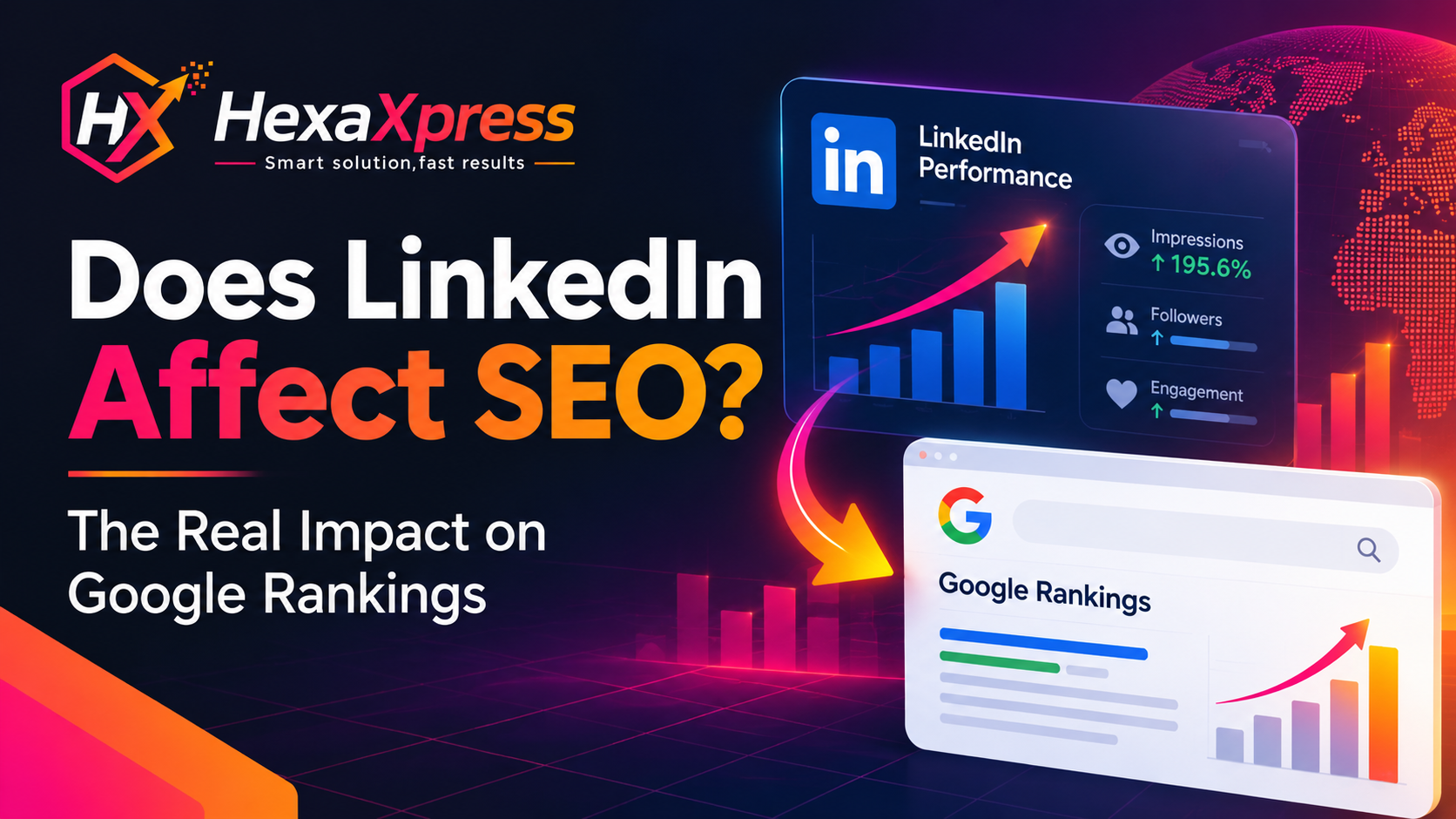
While managing a LinkedIn Page for a product-based company, I noticed a significant improvement in organic impressions over two consecutive reporting periods.
Our LinkedIn Page grew from 1,260 organic impressions to 3,725 impressions, representing a 195.6% increase.
That improvement made me curious about something beyond LinkedIn itself.
- If our LinkedIn content was reaching more people, would our company website also experience better organic search performance?
- Would higher LinkedIn impressions improve Google rankings?
- Or are LinkedIn performance and website SEO two independent marketing outcomes?
These questions led me to explore how social media marketing connects with search engine optimization.
1. Is LinkedIn Engagement a Direct Google Ranking Factor?
No. LinkedIn likes, impressions, comments, and shares are not established direct Google ranking factors.
A LinkedIn post receiving 10,000 impressions does not automatically improve the search rankings of a website linked from that post.
Similarly, increasing LinkedIn followers does not guarantee higher organic visibility on Google.
Google’s ranking systems evaluate webpages using various signals, including content relevance, quality, links, and search context.
LinkedIn engagement metrics belong to a separate platform.
Consider a simple example.
A SaaS company publishes a LinkedIn post announcing a new feature.
- The post generates 15,000 impressions and hundreds of reactions.
- Despite the strong LinkedIn performance, the company’s website may show no meaningful change in Google Search Console.
- This is possible because social engagement and organic search rankings are different measurements.
- Google recommends promoting website content through channels including social media, but it does not establish LinkedIn engagement as a direct website ranking signal.
2. How LinkedIn Can Indirectly Support SEO
Although LinkedIn performance does not directly control Google rankings, it can create opportunities that support organic search visibility.
A. Referral Traffic and Website Discovery
- Imagine publishing an informative LinkedIn post about common website performance problems.
- You include a relevant link to a detailed guide on your company website.
- Interested readers click through to explore the topic.
- This increases referral traffic from LinkedIn.
- The traffic itself is not a guaranteed ranking boost.
However, it creates opportunities for readers to discover your expertise, explore related resources, and potentially become customers or advocates.
B. Brand Awareness and Branded Searches
- LinkedIn content can introduce your company to professionals who were previously unfamiliar with your brand.
- Someone might read an informative LinkedIn post today and search for the company on Google a few days later.
For example, a person discovers a website optimization product on LinkedIn.
– Later, they search for the product name because they want to explore its features.
This creates branded search demand.
– Branded searches do not automatically improve rankings for unrelated keywords, but they can indicate growing brand familiarity.
– Marketers can investigate these changes through Google Search Console.
C. Editorial Backlinks and Content References
- This is one of the potentially important indirect SEO benefits.
- Suppose a company publishes original research on its website and shares the findings on LinkedIn.
- An industry blogger discovers the research and references it in a new article.
- The blogger also links to the original source.
- That editorial link may contribute to SEO performance when it meets Google’s quality guidelines.
- The LinkedIn post helped the research reach the relevant person.
However, the potentially valuable SEO signal came from the independent editorial link, not from LinkedIn reactions.
D. Content Discovery and Topic Research
- LinkedIn is also useful for understanding audience interests.
- Imagine publishing posts about five different problems affecting your industry.
- Two topics attract thoughtful discussions from professionals.
- That feedback may suggest opportunities for additional website content.
- The marketing team can conduct keyword research, identify relevant search queries, and create detailed guides.
- LinkedIn helps reveal audience conversations.
- SEO tools help determine search demand.
- Together, these insights can inform a more relevant content strategy.
E. Business Credibility
Read the full LinkedIn organic reach experiment and its 195.6% growth results.
4. How to Measure LinkedIn’s Indirect SEO Contribution
Businesses should evaluate LinkedIn and website performance using data from multiple sources.
– LinkedIn Page Analytics
Track impressions, relevant engagement, follower growth, and post performance.
These metrics explain how content performs within LinkedIn.
– Google Analytics 4
Monitor sessions attributed to LinkedIn, engaged sessions, website events, and conversions.
– Use UTM parameters on campaign links to improve attribution.
Example:
https://example.com/blog/?utm_source=linkedin&utm_medium=organic_social&utm_campaign=seo_research
– Google Search Console
Track Google organic search clicks, impressions, search queries, and average positions.
Where available, use branded and non-branded query comparisons.
Look for meaningful changes rather than assuming every increase came from LinkedIn.
Editorial Links and Mentions
Observe whether research promoted through LinkedIn receives independent references from relevant third-party websites.
A citation or editorial backlink may be a more concrete SEO outcome than social reactions.
5. A Practical 90-Day LinkedIn and SEO Research Framework
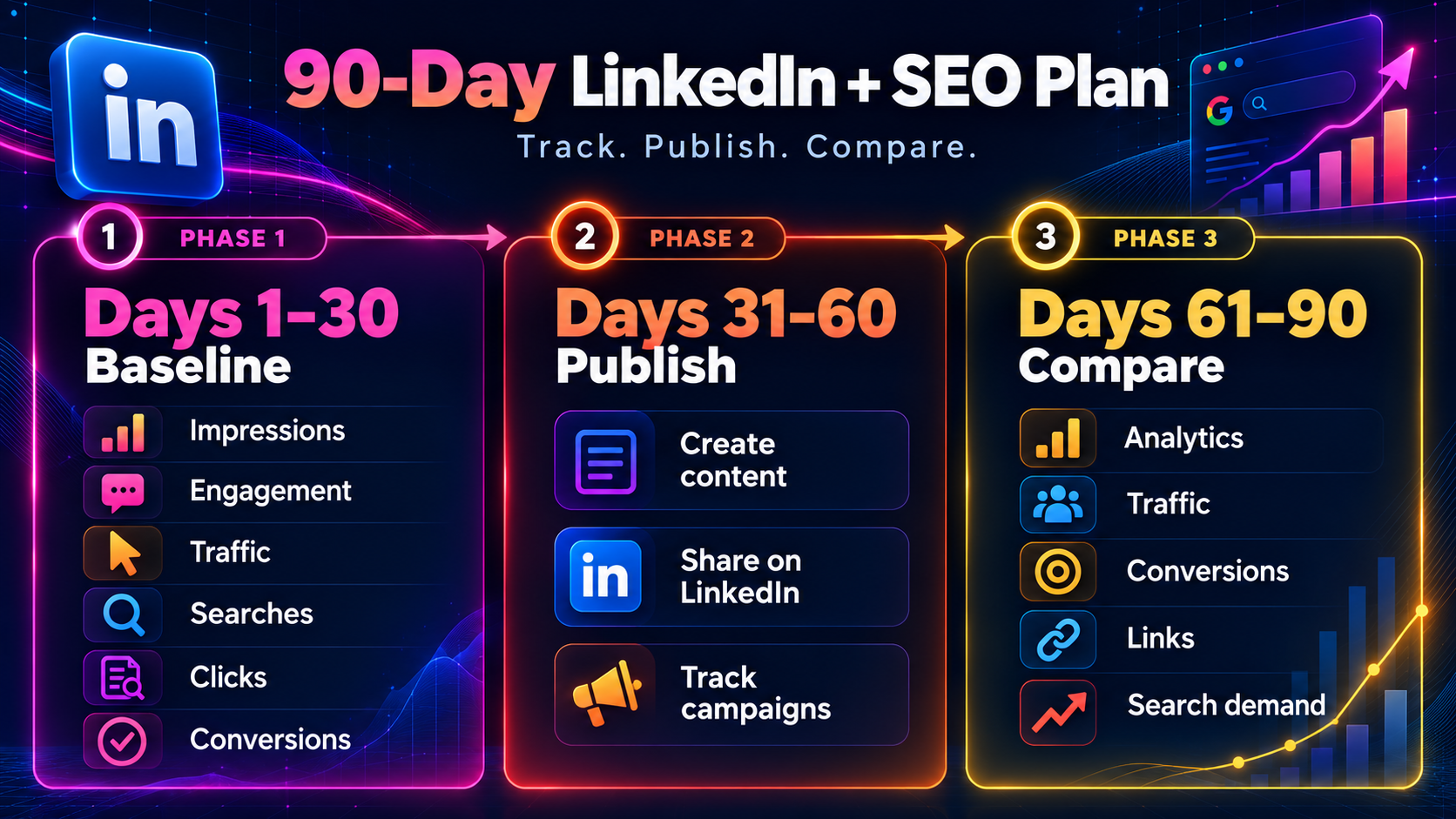
To evaluate LinkedIn’s contribution, I would structure the experiment into three phases.
Days 1–30: Establish the baseline
Record LinkedIn impressions, engagement, referral sessions, branded searches, organic clicks, and conversions.
Days 31–60: Publish and distribute content
Create useful website resources, promote them through relevant LinkedIn posts, and use consistent campaign tracking.
Days 61–90: Compare outcomes
Analyze changes across LinkedIn Analytics, GA4, and Google Search Console.
Identify whether the campaign generated referral traffic, business conversions, editorial links, or changes in search demand.
Keep in mind that correlation does not prove causation. Other campaigns, website updates, and external events may also influence results.
Final Verdict: LinkedIn Is Not a Direct SEO Ranking Shortcut
- LinkedIn performance and website SEO are different, but they can complement each other.
- LinkedIn impressions do not directly increase Google rankings.
- However, LinkedIn marketing can introduce content to relevant audiences, generate referral traffic, build brand familiarity, support content discovery, and create opportunities for valuable editorial references.
- The practical objective should not be to turn LinkedIn likes into Google rankings.
- Instead, businesses should connect LinkedIn marketing with useful website content and measure what happens after people discover the brand.
That leads to the next question:
If LinkedIn isn’t a direct SEO ranking factor, why should service-based and product-based companies invest in it?
Explore the business benefits and practical strategies in our companion article:
Why LinkedIn Marketing Matters for Service and Product-Based Companies