In the previous article, we examined how technical accessibility, search intent, authority, and competition can cause optimized content to underperform.
Once technical accessibility and obvious intent problems have been eliminated, the next step is to determine whether the page has a context gap.
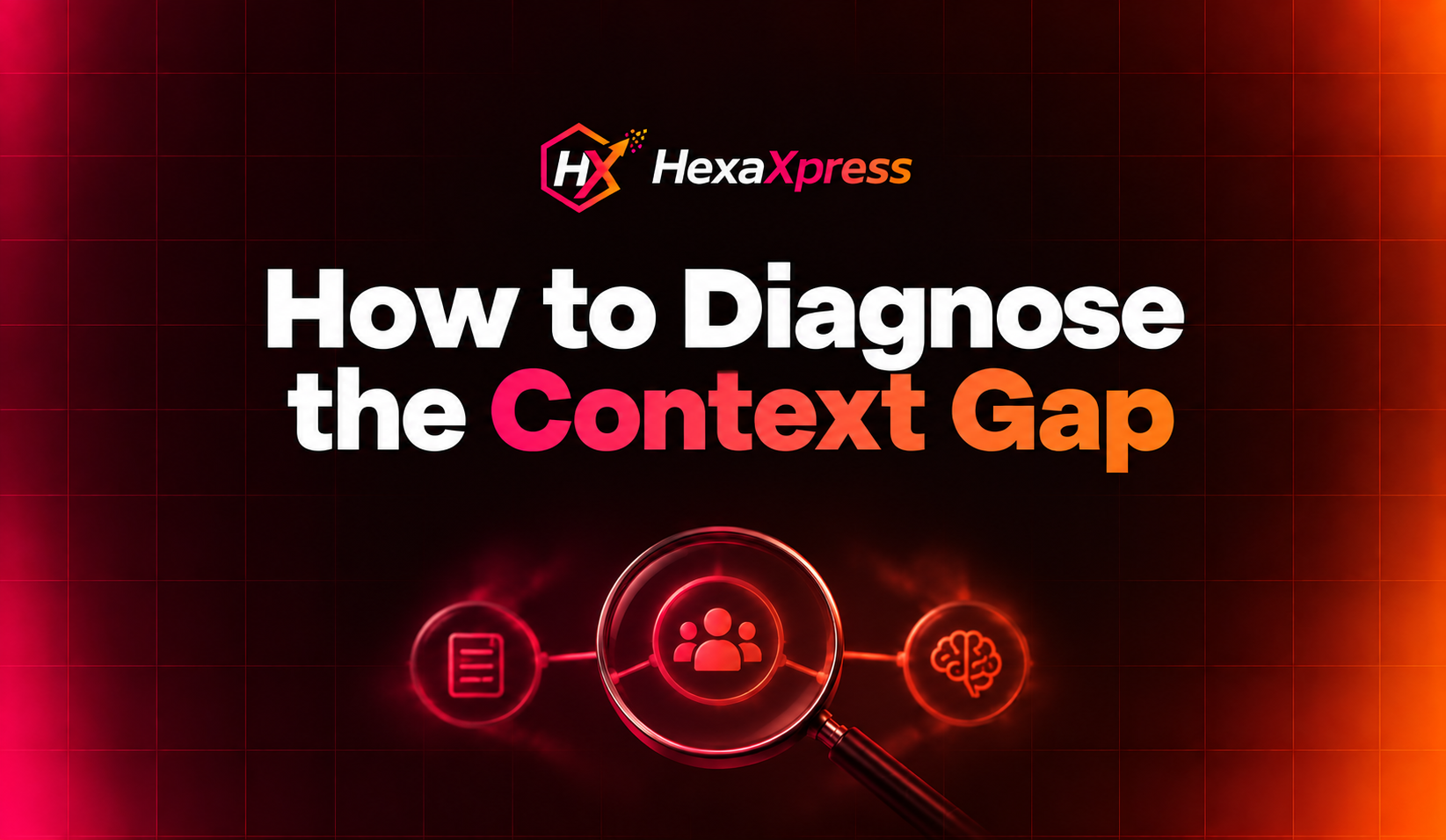
Evaluate the page across three areas.
1. The Audience and Situation Gap
A page can target the correct keyword while addressing no identifiable reader.
For example, “business process automation” could be relevant to:
- A small-business owner trying to reduce administrative work.
- An operations manager dealing with approval delays.
- A finance leader attempting to reduce invoice-processing errors.
- An enterprise technology team planning system integrations.
- A department head exploring AI-assisted workflows.
These readers may use similar search terms, but they do not have the same knowledge, risks, priorities, or buying authority.
How to Identify the Gap
Review the page and ask:
- Is the intended reader clearly identifiable?
- Does the content reflect a specific situation or problem?
- Is it clear what decision the reader needs to make?
- Does the level of detail match the reader’s knowledge?
- Do the examples reflect the reader’s actual responsibilities?
- Is the expected next action clear?
If these elements cannot be identified, the page may be optimized around a keyword without being positioned for a specific audience or situation.
For example, a broad article about business process automation may discuss tools, benefits, use cases, and implementation without clarifying who should use the information or what decision it is intended to support.
The information may be relevant, but its context remains unclear.
2. The Topical Relationship Gap
A useful page can still feel isolated when it has no meaningful relationship with the rest of the website.
Internal links are not merely navigation additions. Google explains that links can help it discover pages and understand their relevance, while descriptive anchor text helps users and Google interpret the destination. See Google’s official.
For HexaXpress, this article naturally connects two established areas: SEO content strategy and AI search visibility. These relationships help clarify where the article belongs within the website’s broader subject structure.
How to Identify the Gap
Examine how the page connects with related content across the website.
Ask:
- Which broader topic does the page support?
- Do relevant pages link to it?
- Does it link to resources that answer the reader’s next questions?
- Are the internal-link anchor texts descriptive?
- Is the page part of a clear subject structure?
- Does it support or compete with another page on the website?
- Can users reach it through a logical navigation path?
A page may have a topical relationship gap when it exists as an isolated article with few meaningful internal links.
The presence of several keyword based links does not automatically create a topic cluster. A strong cluster is built around connected user problems, questions, and decisions.
3. The Experience and Evidence Gap
Generative AI systems can summarize information that is already widely available. Repeating the same definitions and recommendations gives users and retrieval systems little reason to prefer one source over another.
This does not mean every article needs original scientific research. It means the page should contribute something beyond a rewritten summary.
Useful evidence can include:
- First-hand observations.
- Anonymized project situations.
- Screenshots from relevant tools.
- A documented diagnostic process.
- Examples of failed approaches.
- Before-and-after page structures.
- Original checklists or decision frameworks.
- Expert commentary.
- Primary-source documentation.
- Clearly explained limitations.
Google’s guidance on helpful, reliable, people first content asks whether content provides original information or analysis, demonstrates first hand expertise, and gives readers enough information to achieve their goal.
How to Identify the Gap
Review the page and ask:
- Does it offer anything beyond widely available information?
- Are important statements supported by evidence?
- Does it include first-hand experience or original analysis?
- Are the examples specific enough to be useful?
- Does it explain how conclusions were reached?
- Are unsuccessful approaches or limitations discussed?
- Could a reader apply the information without searching elsewhere?
Compare these two statements:
Generic statement:
- Understand your audience before creating content.
Experience led statement:
- During content reviews, I often find that a page has a defined keyword but no defined reader.
The first statement repeats common advice. The second introduces an observed pattern and indicates that the author has encountered the problem directly.
When a page contains only broad recommendations, familiar definitions, and unsupported claims, it may have an experience and evidence gap.
What the Diagnosis Reveals
A context gap is not a single content problem.
It may appear because the page does not clearly define its audience and situation, lacks meaningful relationships with supporting content, or provides too little original experience and evidence.
Some pages may show signs of all three.
The purpose of this diagnosis is not to rewrite the page immediately. It is to identify which contextual weakness is limiting its usefulness before making changes.
In the next article, we will examine how to remediate these gaps and optimize the content without losing its original purpose.